Kenya reduces finance costs on International Monetary Fund (IMF) credit lines

Cheaper World Bank and the International Monetary Fund (IMF) loans have reduced the average cost of the Kenya government’s loans by 2.2 percentage points from 9.1 percent to 6.9 percent.
Parliament Budget Office in a debt analysis said the multilateral loans eased the cost of repaying Kenyan debt despite local banks increasing interest rates for the government.
Access to IMF and World Bank loans has helped Kenya reduce its exposure to commercial debts easing repayment pressures at a time where Covid-19 has hit the country’s coffer and exposed debt vulnerabilities.
The multilateral loans are relatively cheaper, long term and have a grace period where Kenya will not be required to pay as they clear the bad expensive loans.
“Between June 2020 to June 2021 weighted average interest rate (WAIR) of the debt portfolio improved from 9.1 percent to 6.9 percent. This was on account of concessional financing for external borrowing that reduced the external debt stock WAIR from 3.1 percent to 2.9 percent thus keeping interest rate risk exposure on the downside,” PBO said.
“Domestic debt WAIR on the other hand, increased from 10.9 per cent to 11.1 percent indicating a rising cost of borrowing from the domestic market and any given strategy based on domestic market financing will have an incremental impact on total debt interest servicing,” PBO added.
Kenya is trying to balance its debt portfolio after a surge of commercial debts piled up and became expensive to repay taking up more than 63 percent of tax revenue.
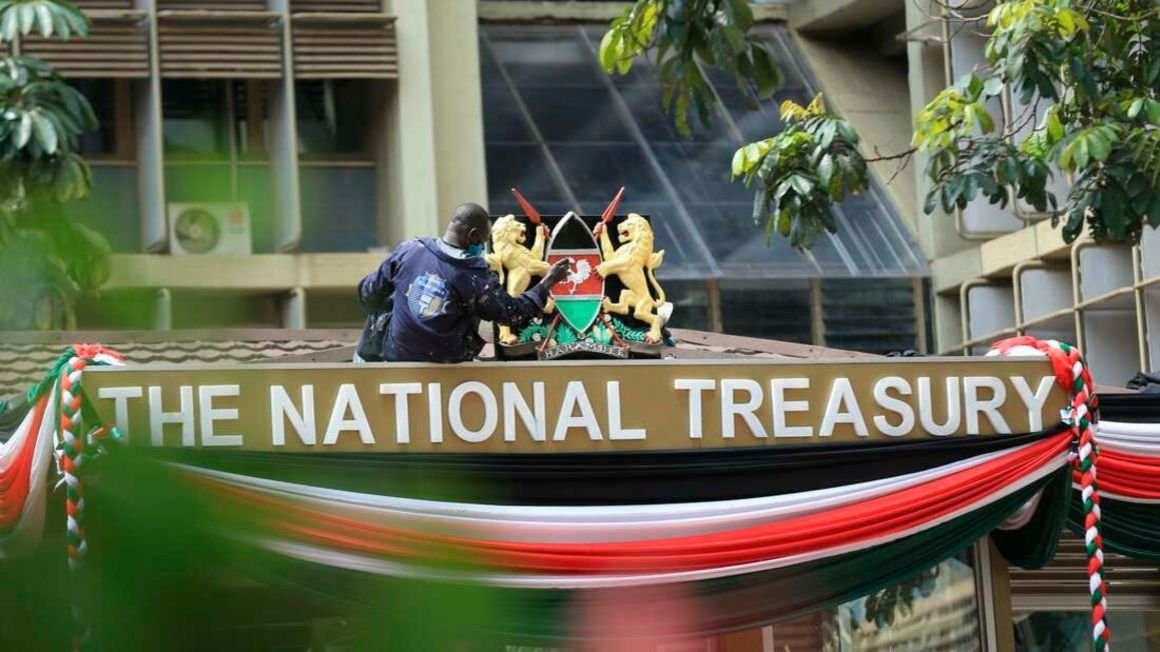
Concessional and semi-concessional borrowing, including from the IMF and other multilaterals are part of Treasury plan’ to limit reliance on external commercial borrowing in the coming years to reduce debt-related vulnerabilities.
By borrowing from the multilateral bodies, the IMF and the World Bank, Kenya has already managed to cut dependence on the more expensive commercial loans.

Related Posts

PZ Cussons appoints Abel Idonije as new Africa People Director
Abel Idonije has been appointed Africa People Director at PZ Cussons, marking a significant new chapter in a…
 By
By
Leaders target financial resilience at NCBA breakfast 2026
Financial inclusion in Kenya has made significant strides, yet industry leaders gathered at the NCBA Financial Inclusion Breakfast…
Kenya Power posts KSh24.99bn as revenue climbs 8.6% in FY2026
Kenya Power and Lighting Company PLC (Kenya Power) has reported a 2.1% increase in profit after tax to…

Standard Bank Namibia, NAMCOL partner on employee value banking
The Namibia College of Open Learning (NAMCOL) and Standard Bank Namibia have strengthened their strategic partnership through a…





Gallery