Nigeria: Naira depreciates despite increased second quarter foreign exchange inflows

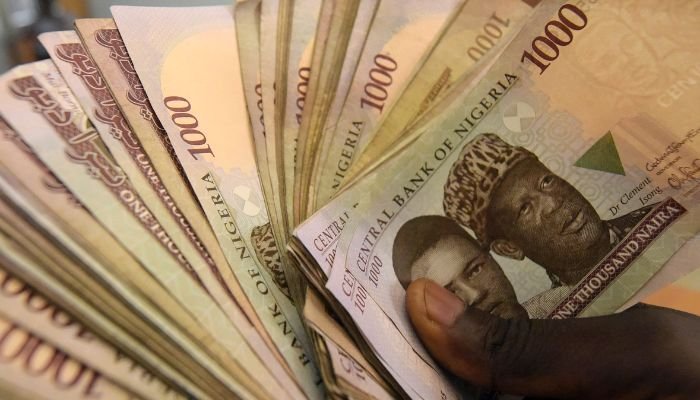
The naira has continued to depreciate at the official and parallel markets despite the increase in foreign exchange inflows into the economy in the second quarter of 2022.
The latest quarterly statistical bulletin of the Central Bank of Nigeria (CBN) shows that total FX inflow into the Nigerian economy increased to $19.5 billion in the second quarter of 2022 from $18.4 billion in the Q1.
Meanwhile, the naira has depreciated by about 5% year-to-date to N443 per dollar on the Nigerian Autonomous Foreign Exchange Fixing window as at the end of last month.
Tunde Abidoye, head of equity research team at FBNQuest said a sharper depreciation of almost 30% on the parallel market has led to a widening of the premium between the official and parallel market rates.
According to a report by the FBNQuest, on a year-on-year basis, the total FX inflow into the economy also increased by 6% y/y. The quarter-on-quarter increase is the first after two consecutive quarters of decline.
An investment banker who does not want her name mentioned said the increase in FX inflow has not reflected on the exchange rate because of FX backlog.
The overall FX flow was split into inflows from autonomous sources and the CBN at $10.7 billion and $8.8bn or respective shares of 55% and 45%.
Taiwo Oyedele, head of tax and corporate advisory services at PwC, said exchange rate stability is a function of demand and supply.
“We have pent-up forex demand, which continues to increase both for legitimate needs, on one hand, as well as illicit and speculative reasons. Despite the marginal increase in foreign exchange inflows, it is not sufficient to meet the forex demand hence the sustained depreciation of the Naira,” he said.
In contrast, total forex outflow from the economy was flat at $11.0bn q/q (-5 percent y/y). Combined, the data implies net FX inflow of about $8.5 billion, and is the fourth lowest since Q4 2016, the report said.
FX inflow through the CBN increased by 15% quarter-on-quarter (q/q). The main drivers were increases of 70% and 117% q/q in FX inflow from oil and the CBN’s swap positions to $2.5 billion and $2.3 billion respectively. A 26% q/q increase in inflows from Treasury Single Account and third-party funds to $2.7bn also contributed.
At $8.5 billion, FX outflows through the CBN nearly equalled inflows, implying a positive net inflow of $316 million as opposed to a negative net outflow of $802 million in the prior quarter.
“That said, it is clear from the data that FX inflow to the CBN is yet to recover to pre-covid levels. For instance, during the eight quarters that preceded Q1 ‘20, right before the pandemic, FX inflow to the central bank averaged USD14.3bn. Consequently, this highlights the magnitude of the foreign exchange liquidity challenge that the bank must deal with,” analysts at FBNQuest said.
Bismarck Rewane, managing director of Financial Derivatives Company Limited, said CBN’s ability to defend the naira will be affected by declining reserves.
Gross official reserves have decreased by $3.0 billion this year to $37.4 billion as of October 28, 2022.
“No meaningful accretion to the reserves this year despite high crude oil prices, driven by tight oil supplies following the conflict in Ukraine,” Abidoye.
Total reserves as at October 28 covered 8.7 months’ merchandise imports on the basis of the balance of payments for the 12 months to June 2022, and 6.6 months when we add services, he said.
He said the benchmark is still above the international benchmark of three months of import cover.
In its macroeconomic note for November, FSDH Research said despite several initiatives by the CBN such as the RT200 programme, the increase in interest rates, clamping down on Bureaux de Change, and FX repatriation policies, the naira kept depreciating against the dollar.
“The recent policy on issuance of new naira notes has also intensified the currency’s depreciation. While the underlying problem with Nigeria’s exchange rate is limited FX inflows, we believe that policies by the apex are important tools that influence the movement of the naira,” analysts at FSDH said.
The report said the goal must be to restore confidence in the market by ensuring policy consistency, clearing of FX backlogs and avoiding policies or implementation frameworks that create uncertainty.
Source: Business Daily, Nigeria
Tags:

Related Posts
NEW: UBA Zambia opens 10th branch in Kasumbalesa
United Bank for Africa (UBA) Zambia has officially opened its 10th branch in Kasumbalesa, a strategic border town…
 By
By
Olaniyi Soyinka joins Airtel as new Reg. HR Business Partner
Olaniyi Soyinka has been appointed Regional Human Resources Business Partner at Airtel Nigeria, marking a significant step in…

Fincra Ghana appoints Yaw Adum-Attah as new Country Manager
Fincra Ghana has appointed Yaw Amoah Adum-Attah as its new Country Manager, entrusting him with strategic leadership of…

Kenya Power’s Kalungu-Uvyu reflects on lessons from leading 11,000 employees
For Cecilia Kalungu-Uvyu, General Manager of Human Resources and Administration at Kenya Power, leading an organization of 11,000…





Gallery