By
By

I haven’t checked in here for some time since I thought it was getting boring, but the last few posts are great quality so I guess I’ll add you back to my everyday bloglist. You deserve it my friend 🙂
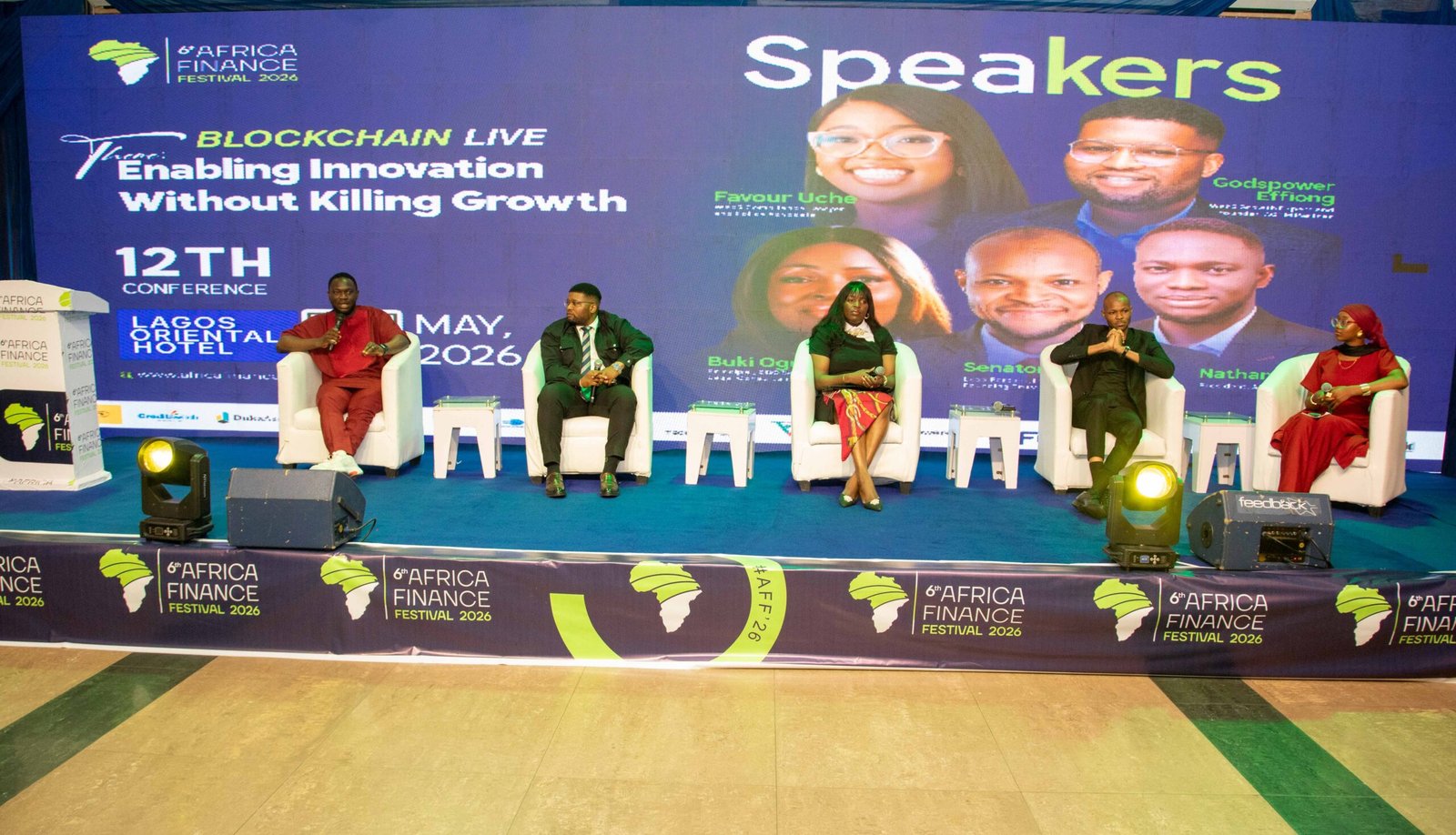
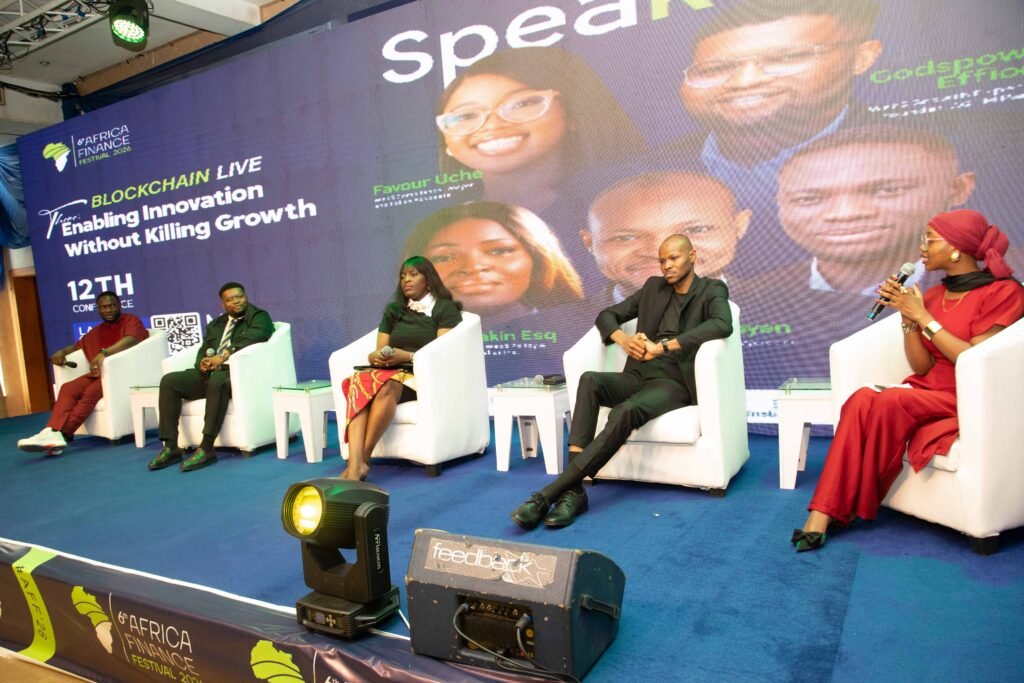
The just-concluded Blockchain Live session at the 6th Africa Finance Festival (AFF) 2026 brought together some of Africa’s leading voices in blockchain, Web3 policy, fintech innovation, and digital regulation for a frank conversation on the future of blockchain regulation across the continent. Moderated by Web3 Compliance Lawyer and Policy Advocate, Favour Uche, the session explored how Africa can build enabling regulatory frameworks that protect consumers while unlocking innovation, investment, and economic growth.
Opening the discussion, Uche noted that while blockchain technology continues to disrupt the global financial system, Africa risks losing out on transformative opportunities if regulators fail to create supportive policies. She stressed that blockchain is no longer a fringe technology but a core component of financial infrastructure, shaping payments, digital assets, and cross-border commerce. According to her, the central question for Africa is no longer whether blockchain will shape finance, but whether the continent will create regulations that support innovation without stifling growth.
The panel featured Senator Ihenyen, Lead Partner at Infusion Lawyers and Founding Trustee of the Virtual Asset Service Providers Association (VASPA); Bukky Ogunsaki, Principal at BBO Solicitors and Web3 Consultant at Interstellar Inc.; Godspower Effiong, Founder of AGTP Partner; and Nathaniel Luz, President of the Africa Stablecoin Network and COO of YBP Exchange.

A major theme throughout the session was the economic cost of poor or delayed regulation. Nathaniel Luz argued that Africa’s regulatory systems often move too slowly compared to the speed of innovation. According to him, while global markets allow policy to create opportunities before innovation scales, many African countries wait until industries grow before attempting regulation — often aggressively. He warned that such an approach creates uncertainty that scares away investors, innovators, and international capital.

Godspower Effiong reinforced this argument from a business and market-entry perspective. Drawing from his experience managing African operations for global hardware wallet provider Ledger, he revealed that regulatory uncertainty significantly affected strategic partnerships and commercial expansion efforts in Nigeria and across Africa. Despite Nigeria’s status as one of the world’s largest cryptocurrency adoption markets, he explained that fear surrounding regulation discouraged major e-commerce and financial institutions from partnering with blockchain companies. According to him, this uncertainty eventually forced Ledger to pause its African operations, representing a major missed opportunity for the region.

Bukky Ogunsaki described poor regulation as a direct driver of capital flight and innovation exodus. She noted that billions of dollars in digital asset investments and blockchain-related capital continue to leave African economies for jurisdictions with clearer regulatory structures such as Dubai, Singapore, and the European Union. Ogunsaki explained that many African startups are increasingly seeking legal migration pathways to more innovation-friendly countries because of unclear or restrictive local regulations. She warned that the continent risks losing both intellectual property and future global technology leaders if regulators fail to create collaborative policy environments.

Senator Ihenyen delivered one of the session’s most extensive interventions, tracing the evolution of blockchain regulation in Nigeria since 2018. He described the Central Bank of Nigeria’s earlier restrictions on crypto-related banking activities as a turning point that pushed the industry underground rather than eliminating it. According to him, instead of allowing financial institutions to maintain visibility over transactions and collaborate with innovators, the restrictions created a massive peer-to-peer ecosystem operating outside formal oversight structures.
He argued that the consequences included tax leakages, reduced foreign direct investment, brain drain, and institutional infrastructure gaps. Ihenyen revealed that several innovators, developers, and founders relocated from Nigeria to countries such as the UAE, Canada, and the United States because of regulatory uncertainty. He stressed that Africa was effectively funding innovation ecosystems abroad by failing to retain local blockchain talent and intellectual property.
Beyond identifying the problems, the panel focused heavily on what “good regulation” should look like. Senator Ihenyen advocated for a risk-based and proportional regulatory approach that recognizes the differences between blockchain products, stablecoins, digital assets, decentralized finance protocols, and NFT ecosystems. According to him, regulators should avoid blanket policies and instead create tiered licensing systems that account for varying levels of operational risk and business scale.
Bukky Ogunsaki echoed similar sentiments, highlighting global best practices such as activity-based regulation, tiered licensing frameworks, and passport licensing systems currently being adopted in regions like the European Union and the United Kingdom. She proposed that Africa should explore continent-wide blockchain licensing structures aligned with the objectives of the African Continental Free Trade Area (AfCFTA), allowing licensed operators to scale more easily across African markets.
ALSO READ:WEMA BANK TARGETS ON TIER-ONE STATUS WITH EXPANSION DRIVE
Godspower Effiong praised the Nigerian Securities and Exchange Commission (SEC) for its regulatory incubation initiatives, particularly its support for CNGN, Nigeria’s naira-backed stablecoin project. He described stablecoins as one of the most powerful intersections between traditional finance and blockchain technology because they combine the trust of fiat currency with the efficiency and programmability of blockchain infrastructure.
Effiong emphasized that future success would depend on collaboration between regulators, innovators, banks, and financial executives. According to him, financial institutions must become more open to blockchain integration if Africa hopes to build globally competitive digital financial systems.

Nathaniel Luz added urgency to the discussion by warning that the global technology landscape is evolving too quickly for Africa to remain slow-moving. He pointed to artificial intelligence, global digital commerce, and borderless innovation as forces that are rapidly reshaping financial ecosystems. Luz argued that African countries can no longer afford to build major technology companies while allowing their legal structures, intellectual property, and headquarters to reside abroad.
The session concluded with a strong call for collaboration between blockchain innovators and traditional financial institutions. Responding to a final question on the future relationship between both sectors, Bukky Ogunsaki stressed that blockchain technology should be viewed as foundational infrastructure rather than merely cryptocurrency speculation.
She explained that many financial institutions are already quietly integrating blockchain solutions into their backend systems, particularly for payments, wallets, and transaction processing. According to her, the organizations that move fastest in adopting blockchain-enabled efficiency and speed will define the next generation of African financial services.

Standard Bank Namibia’s Corporate and Investment Banking division has successfully hosted the third annual Padel for Purpose fundraising…
Kenya Power and Lighting Company PLC (Kenya Power) has reported a 2.1% increase in profit after tax to…
The Namibia College of Open Learning (NAMCOL) and Standard Bank Namibia have strengthened their strategic partnership through a…
The Kenya National Chamber of Commerce and Industry (KNCCI) has engaged Sidian Bank in high-level discussions to strengthen…