Aishah Ahmad warns weakening global cooperation risks economic stability in Africa

Global finance and governance expert Aishah Ahmad has highlighted growing concerns over the weakening of global economic cooperation, warning that emerging and developing economies, particularly in Africa, could face significant consequences if current trends persist.
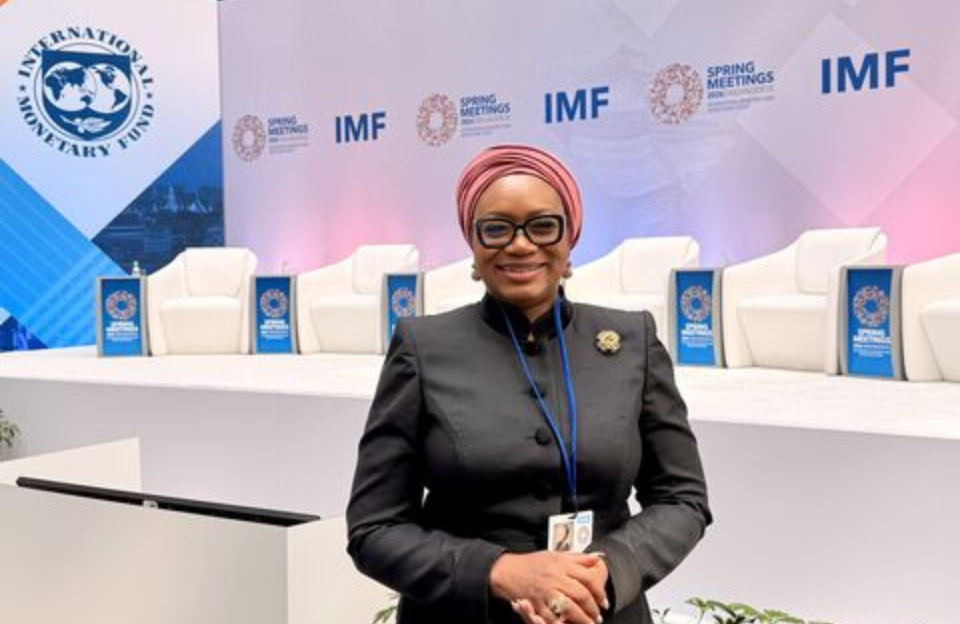
Reflecting on high-level discussions in Washington, the former Deputy Governor of the Central Bank of Nigeria noted that while issues such as tariffs, debt pressures, and aid reductions dominated formal conversations, a deeper and more consequential shift received insufficient attention: the gradual fracturing of the global cooperative order that has underpinned decades of economic progress.
According to her, many of the world’s development gains, from poverty reduction and financial inclusion to improvements in health, education, and women’s economic participation, have been driven by coordinated international efforts through frameworks such as the Millennium Development Goals and Sustainable Development Goals. She warned that as this cooperative system weakens, developing economies may struggle to replace critical support in financing, technical expertise, and market access.
ALSO READ: KHAYYAM JUMANI BECOMES MANAGING DIRECTOR OF J.P. MORGAN PRIVATE BANK
Ahmad further stressed that there was limited urgency in addressing how emerging markets would identify new growth opportunities in an increasingly fragmented global environment. She described this gap as a critical oversight, noting that the question of future opportunity pathways deserved more focused global attention.
Turning to Africa, Ahmad argued that the continent can no longer rely on traditional export-led growth models that previously powered economic expansion in parts of Asia. She explained that today’s global landscape, marked by geopolitical tensions and less predictable trade flows, requires a new growth architecture built on regional integration, implementation of the African Continental Free Trade Area, digital trade, value addition, and stronger domestic productivity.
She also pointed to Africa’s rapidly growing population as a defining global economic factor. By the early 2030s, Sub-Saharan Africa is expected to account for a significant share of global working-age population growth, with projections indicating that by mid-century, nearly half of new entrants into the global labour force will be African.
“This is no longer just a continental issue,it is a global one,” Ahmad emphasized, warning that how this demographic shift is managed will have far-reaching implications for global economic stability and growth.
She concluded that these interconnected trends ultimately raise a fundamental question for policymakers and global institutions: whether countries can still effectively collaborate to solve shared challenges in an increasingly fragmented world. Ahmad described this as one of the defining economic tests of the decade.
Tags:

Related Posts
Anne Juuko leads East African Development Bank as new CEO
The East African Development Bank has appointed Anne Juuko as its new chief executive, placing a seasoned banking…
 By
By
Infobip appoints Mirta Pađen Lee as new VP of People to drive AI-first transformation
Global AI-first cloud communications platform Infobip has appointed Mirta Pađen Lee as Vice President of People, effective 1…

Mutual Trust MFBank appoints Josiah Ayoola Bukoye as new MD/CEO
Josiah Ayoola Bukoye has been appointed Managing Director and Chief Executive Officer of Mutual Trust MFBank Limited, the…

Standard Bank unites Namibia corporates for affordable housing tournament
Standard Bank Namibia’s Corporate and Investment Banking division has successfully hosted the third annual Padel for Purpose fundraising…





Gallery