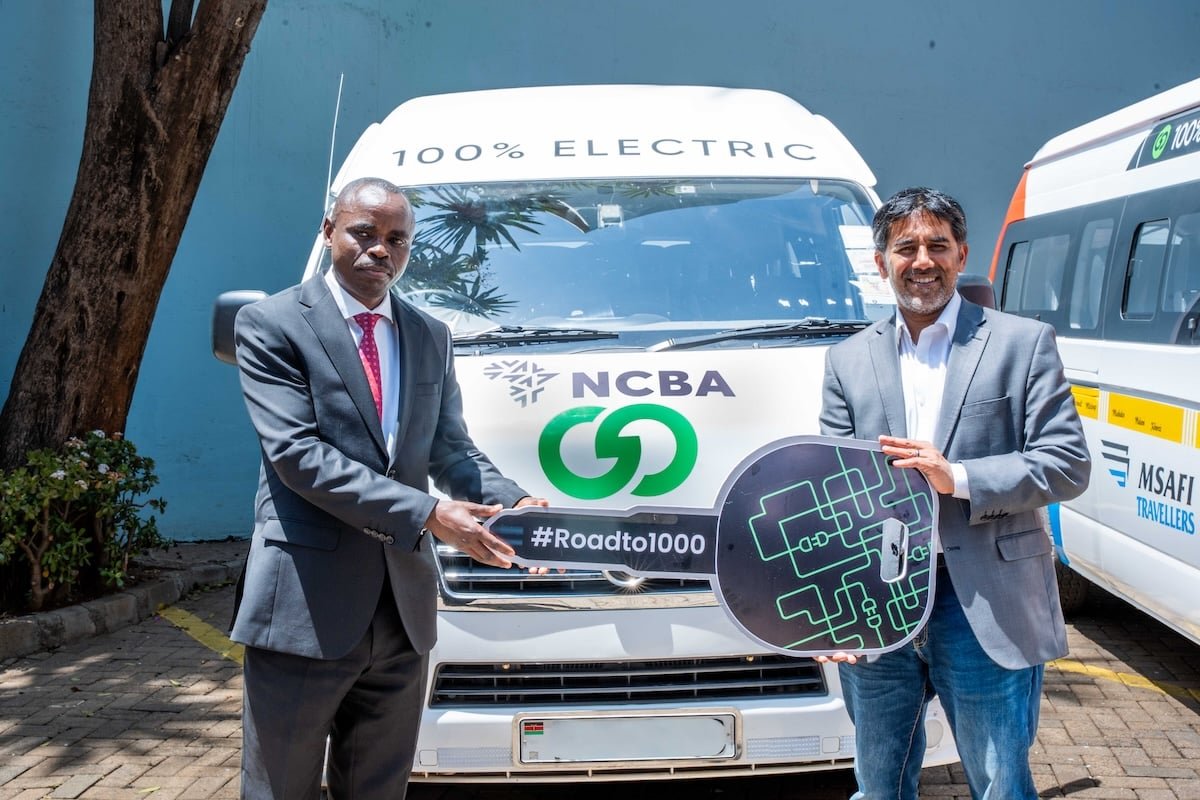
NCBA,BasiGo to fund 1,000 new electric vans for Kenya

NCBA Group and electric mobility company BasiGo have partnered to finance 1,000 electric vans for Kenya’s public transport sector. This partnership combines asset financing, leasing, and BasiGo’s Pay-As-You-Drive model to reduce the upfront cost of switching from diesel to electric vehicles.
The initiative marks a significant step in Kenya’s transition to cleaner public transportation, in which minibuses and vans remained widely used but were largely diesel-powered. NCBA becomes the first local bank to invest directly in BasiGo, supporting the programme through a KES 2 billion e-mobility financing facility.
The financing is structured to serve different categories of transport operators. PSV SACCOs and established PSV companies could access financing of up to 90% of an asset’s value over 60 months, while individual SACCO members could access up to 80% over 48 months, with a discounted processing fee of 1.5%.
READ ALSO: LADI SANNI JOINS RENAISSANCE AFRICA AS GM, NEW BUSINESS DEVELOPMENT
The partnership is aimed at addressing the high initial cost of electric vehicles, which had remained a major barrier for small transport businesses. By combining conventional bank financing, leasing and usage-based payments, NCBA and BasiGo sought to make electric fleets more accessible to public transport operators, schools, hospitals and other institutions.
BasiGo’s own journey to this point is worth understanding. The company introduced electric buses into passenger operations in Kenya in 2022 and has built its business around providing vehicles, charging, and maintenance services alongside its Pay-As-You-Drive financing model. The company had accumulated more than 1,200 reservations for electric buses and vans, with 136 vehicles already operating across Kenya and Rwanda.
BasiGo’s Ma3e electric van is also being built locally in Kenya through a partnership with Associated Vehicle Assemblers (AVA) in Mombasa. The locally assembled vehicle offered a range of up to 300 kilometres, while local production helped reduce import-related costs and supported the development of Kenya’s domestic electric mobility industry.
BasiGo had locally assembled electric vehicles through its partnership with Kenya Vehicle Manufacturers, which supported the country’s first dedicated electric bus assembly line. The facility represented an investment of more than KES 3.5 billion ($27 million), with the NCBA financing deal helping to strengthen the financial ecosystem needed to support Kenya’s growing electric mobility industry.
For NCBA and BasiGo,the partnership goes beyond vehicle financing by bringing together bank funding, local vehicle assembly, expanding charging infrastructure and flexible, usage-based payments. By combining these elements at scale, the initiative could demonstrate how African cities can transition to electric public transport using local investment and infrastructure.

Related Posts
Standard Chartered Bank Botswana announces up to 26% profit growth in H1 2026
Standard Chartered Bank Botswana Limited has issued a cautionary announcement stating that its unaudited consolidated profit before tax…
 By
By
Ladi Sanni joins Renaissance Africa as GM, New Business Development
Ladi Sanni has been appointed General Manager, New Business Development at Renaissance Africa Energy Company, In a statement…

Seriti Green appoints Jasmin Pillay as new Chief People Officer
Seriti Green has appointed Jasmin Pillay as Chief People Officer, strengthening its executive leadership team as the renewable…
First Capital Bank Zimbabwe posts 22% Profit surge to ZWG431.8m in H1 2026
First Capital Bank Zimbabwe has reported a 22 percent increase in profit after tax to ZWG431.8 million ($16.11million…




Gallery