The Hidden Cost of Doing Business in Nigeria

Modupe Coker
The biggest obstacle facing many entrepreneurs in Nigeria is not a shortage of ideas or effort. It is the high cost of building and running a business in an environment that makes almost every step more expensive.
Entrepreneurship in Nigeria is often celebrated as a story of grit and resilience. Behind every surviving business, however, lies a long list of invisible costs that rarely make the headlines. Starting and running an enterprise here means not only paying for ideas, talent and inventory , it means privately funding the gaps left by weak infrastructure, limited finance and a high-cost operating environment. These burdens fall especially hard on micro, small and medium enterprises (MSMEs), which form the backbone of the economy.
The Capital Conundrum
Access to affordable capital remains one of the most persistent barriers. PwC’s 2024 MSME Survey found that 35% of businesses ranked inadequate access to finance as their top growth constraint. The International Finance Corporation has estimated the unmet demand for credit by Nigerian MSMEs at approximately $32.2 billion (around ₦13 trillion).
In practice, many entrepreneurs rely on personal savings, family support or high-interest informal loans. Recent data shows that more than half of business owners fund operations primarily from personal resources, while formal bank lending to the sector remains limited. With commercial interest rates often above 30% in periods of tight monetary policy, formal credit becomes effectively inaccessible for most small operators. This forces businesses to remain under-capitalized, limiting their ability to expand, hire or invest in efficiency.
Powering Survival: The Energy Burden
Electricity is another major drain. Unreliable grid supply means most businesses must self-generate power. The International Monetary Fund has estimated that the lack of reliable electricity costs the Nigerian economy around $29 billion annually. Manufacturers alone spent an estimated ₦1.11 trillion on alternative energy sources in 2024, a sharp rise from the previous year.
Industry estimates suggest tens of millions of MSMEs operate under energy stress. Many report that diesel and generator costs now rival or exceed rent and staff salaries. In sectors such as manufacturing, cold storage, food processing and beauty services, energy can consume 15–45% of revenue. A salon owner, for instance, must buy dryers, chairs, mirrors and equipment, and then fund a generator, fuel, batteries or solar systems just to keep the lights on and the tools running. These extra layers of spending erode margins long before the business turns a profit.
READ ALSO: N SEVEN INCREASES EQUITY STAKE IN GUINNESS NIGERIA VIA NGX
Location, Logistics and the Stack of Costs
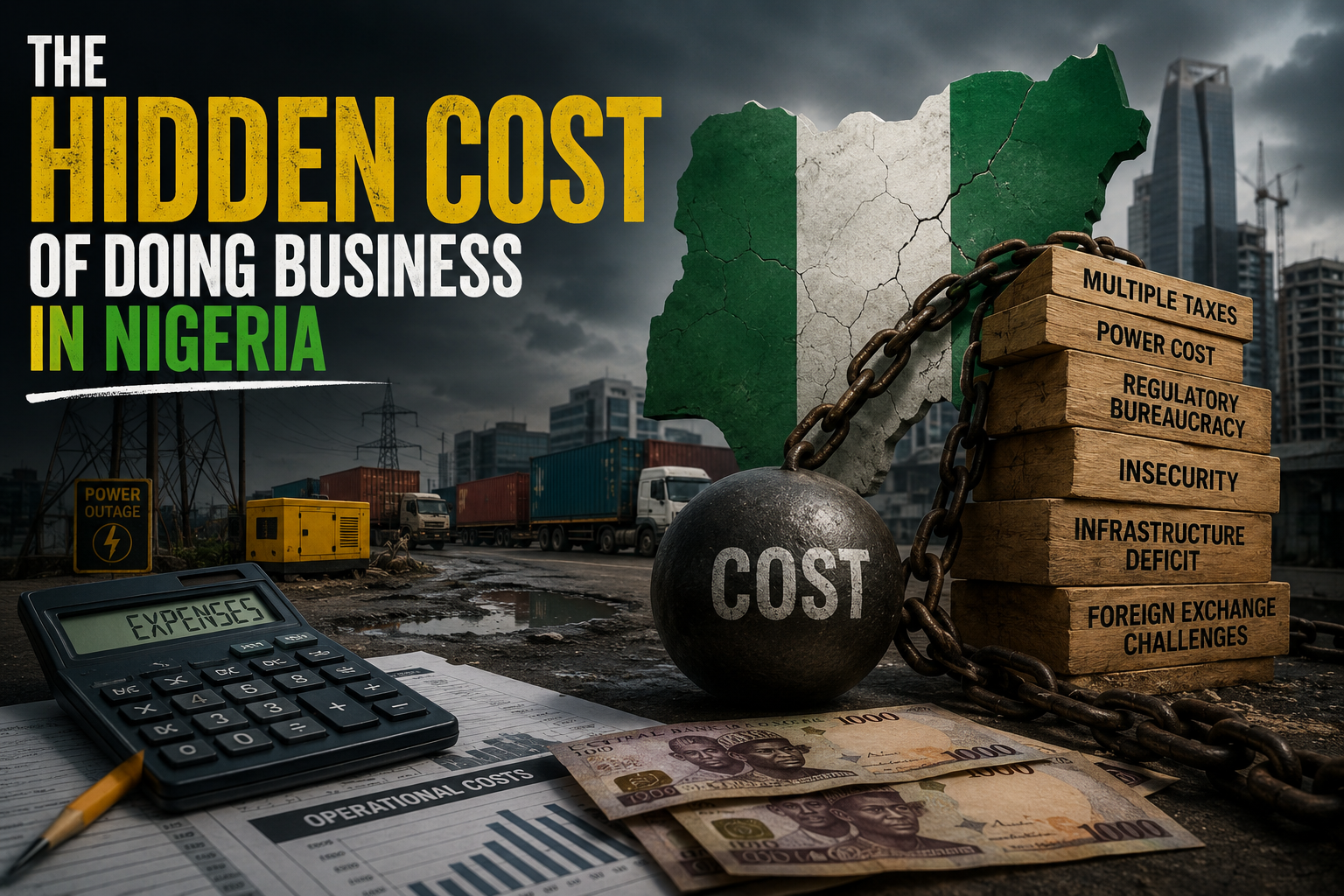
A good location can determine whether customers walk through the door, yet strategic sites carry high rents. After securing premises, entrepreneurs still face the costs of stocking inventory, training staff, marketing and maintaining working capital. Multiple taxation, logistics inefficiencies and insecurity add further layers. Central Bank of Nigeria business surveys have consistently ranked high or multiple taxes, insufficient power supply and insecurity among the top constraints facing firms.
Taken together, these factors create a paradox: the cost of starting and sustaining a business keeps rising, while returns do not always keep pace. Entrepreneurs are not simply paying to operate , they are subsidising infrastructure deficits, energy shortfalls, finance gaps and regulatory complexity.
Broader Impacts on MSMEs and the Economy
MSMEs number around 39–40 million and account for roughly 46–50% of GDP while employing 80–87% of the workforce, according to data from SMEDAN, the National Bureau of Statistics and other assessments. When these businesses struggle under high operating costs, job creation slows, productivity remains low and the informal sector expands. Reduced competitiveness also limits the ability of local firms to participate effectively in regional and global value chains.
The cumulative effect is felt across the economy: higher consumer prices, weaker industrial output, slower formalization of enterprises and constrained tax revenues. International comparisons show that Nigerian firms lose a meaningful share of sales to power outages and spend far more on self-generated electricity than peers in many other markets.
Looking Beyond Survival Stories
If Nigeria wants more businesses to survive, create jobs and contribute meaningfully to growth, policy attention must shift from celebrating resilience to reducing the structural costs that force entrepreneurs to absorb public goods privately. Improving electricity reliability, expanding affordable finance, simplifying taxation and strengthening logistics would lower the hidden price of enterprise and allow more ideas to translate into sustainable businesses.
Tags:

Related Posts

VFD Group appoints Ijeoma Emezie-Ezigbo as new Deputy Managing Director
VFD Group has appointed Ijeoma Emezie-Ezigbo as Deputy Managing Director, bringing a seasoned deal-advisory leader into its executive…
 By
ByAnne Juuko leads East African Development Bank as new CEO
The East African Development Bank has appointed Anne Juuko as its new chief executive, placing a seasoned banking…

Etihad, Ibom Air sign new Interline agreement linking Nigeria to global network
Etihad Airways, the national carrier of the United Arab Emirates, and Nigerian airline Ibom Air have signed an…
Gulf Energy delivers onshore rig to Mombasa Port for Turkana Crude Oil Drilling
Kenya has taken another major step towards achieving its first crude oil production after Gulf Energy E&P BV…





Gallery