 By
By
I just discovered langit69slot last week and I am already hooked on the slot collection. Everything loads quickly on my phone and the daily bonuses keep me coming back. Highly recommend this spot for anyone who loves spinning reels. langit69slot
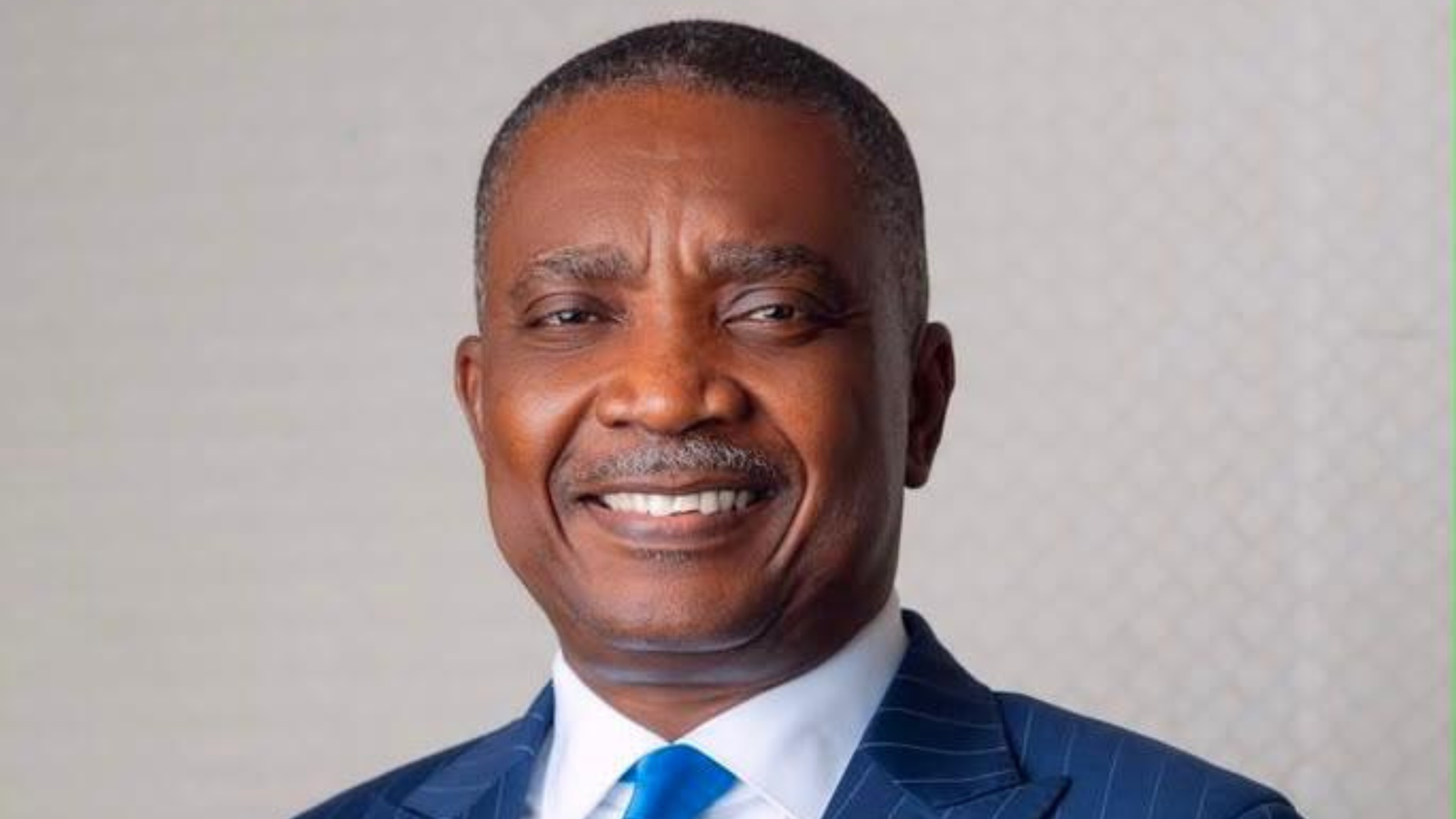
Daniel Asiedu has spent more than 30 years transforming financial institutions and building a reputation as one of Africa’s most accomplished banking leaders. From PricewaterhouseCoopers to Zenith Bank Ghana and the Agricultural Development Bank, the pattern has remained consistent: enter, rebuild, and transform. On May 13, 2026, at the Africa Finance Festival in Lagos, that pattern was formally recognised when he was named Banking Icon of the Year.
The annual festival, held across two days in Lagos, Nigeria, brings together banking and finance leaders from across Africa. Speaking at the conference on the opening day, he said:
“Africa does not need bigger banks. It needs better banks.”
For a banker whose career has been defined by institutional transformation, the award simply confirmed what his record already showed.
Currently, Asiedu serves as Managing Director of OmniBSIC Bank Ghana, one of the country’s fastest-growing financial institutions and a key example of his long-standing approach to banking transformation.
The Man Behind the Award
Asiedu’s career began at PricewaterhouseCoopers, where he qualified as a Chartered Accountant and built his grounding in audit, corporate governance, and financial management. From PwC he moved through Zenith Bank Nigeria, the Volta River Authority, and Standard Trust Bank Ghana, before rising to Managing Director and CEO of Zenith Bank Ghana, where the bank was named Bank of the Year by The Banker magazine two years running. A subsequent tenure at the Agricultural Development Bank produced another turnaround, another restored institution. Wherever he went, he left the place better than he found it.
How OmniBSIC Began
OmniBSIC was born out of Ghana’s banking sector consolidation, a merger of Omni Bank and Sahel Sahara Bank. Asiedu was the consultant who structured the transaction. When the newly merged bank struggled to find its identity, the board turned to him again, this time to lead it. He accepted, returning to a familiar assignment: rebuilding from within.
The Transformation
The results have been hard to ignore. In 2025, OmniBSIC nearly doubled its operating income from GHS 746.1 million to GHS 1.43 billion, grew its balance sheet by close to 70%, and advanced from Tier 4 to Tier 3 in Ghana’s banking rankings. For an institution that did not exist a decade ago, the numbers demand attention.
How He Runs It
At OmniBSIC, the approach is the same in principle as it has always been, bigger in scale. New talent, tightened governance, heavy investment in technology, and a customer philosophy that rejects the generic at every turn. Every client has a dedicated relationship manager. Products exist for women, students, children, and the visually impaired. Sector specialists serve corporate clients in telecoms, mining, and transport. In 2026, the bank plans to launch a fully comprehensive mobile banking platform and an automated interactive banking terminal with no teller, full service which Asiedu describes as the first of its kind in the region.
Always a student
His pursuit of learning matches his professional ambition. A Bachelor’s degree in Mechanical Engineering from the University of Ibadan, Nigeria, was just the starting point; he went on to earn three postgraduate degrees from the University of Ghana, alongside executive programmes at Harvard, Wharton, Oxford, INSEAD, MIT Sloan, and London Business School. He holds his staff to the same standard, sending senior team members to world-class institutions.
The Honours
The Banking Icon of the Year award adds to a collection that includes the Global Well-Respected CEO in Banking Award in 2023, Personality of the Year at the Ghana CEO Awards and Ghana Business Awards that same year, and a place on Timeiconic Magazine’s Top 10 Global Visionaries in Banking list in 2025.
The Philosophy
For Asiedu, leadership has never been about authority. It is about influence, empowerment, and vision, and making sure that when people feel heard, they give their best work. Institutions do not transform because they grow bigger. They transform because leadership changes them.

VFD Group has appointed Ijeoma Emezie-Ezigbo as Deputy Managing Director, bringing a seasoned deal-advisory leader into its executive…
The East African Development Bank has appointed Anne Juuko as its new chief executive, placing a seasoned banking…
Etihad Airways, the national carrier of the United Arab Emirates, and Nigerian airline Ibom Air have signed an…
I&M Bank Ltd has appointed Abdi Mohamed as its new Chief Executive Officer, following regulatory approval by the…