Indigenous Banks Must Handle Gov’t Transactions


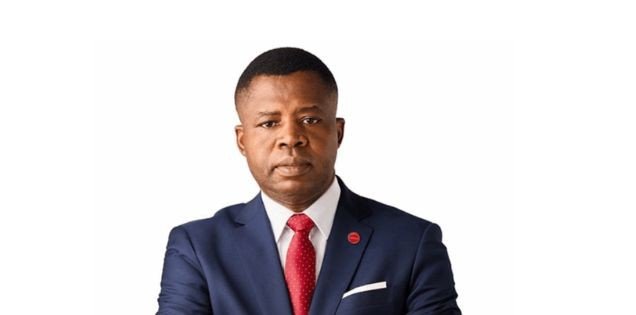
Indigenous financial institutions must be made to handle big-ticket government transactions to build their capacity and to truly transform them as enablers of growth, John Awuah, Chief Executive Officer of UMB has advocated.
“I think there must be a deliberate national policy [to build the capacity of Ghanaian banks]. Just as we talk about buying made in Ghana goods, people forget that it is important to talk about buying made in Ghana financial services as well.
How do you do that? Just like in the oil sector where there is a percentage for local content and the rest goes to others who have the capacity, I think government should not hide on the back of ‘they are too small to handle this transaction’ and give local banks the opportunity. Government can say ‘We want local banks to handle national interest transactions’,” Mr. Awuah said.
Ghana’s banking sector is dominated by the foreign and African-owned banks from the United Kingdom, France, South Africa, Nigeria and other parts of the continent, with the local players lagging behind in terms of capacity.
He said: “If there is that big project, gov’t can say that: ‘though you are going to finance just US$5million of it, I will make you the lead arranger, all the fees and all the things that comes with leading the transaction, all the monitoring and all the arrangements for the facility, we will make you responsible. Bring the other banks that have the capacity to take US$40million and US$50million and you will be the champion of the transaction’. But that must be driven by somebody who has an interest in building local capacity. You cannot build the capacity of local banks by just leaving everything open.”
There are 35 universal banks servicing a nation of 26million inhabitants, with a Gross Domestic Product (GDP) of almost US$35billion.
South Africa is a nation of 55million inhabitants, with a GDP of close to US$400billion, but with a universal bank tally of less than 20. Nigeria has less than 25 universal banks serving a population of almost 200million with a GDP in excess of US$500billion.
Give the imminent increase in the minimum capital requirement of universal banks, Mr. Awuah said banks must collaborate a lot more.
“Banks should be happy to collaborate a lot more; to talk to each other a lot more. We can help the environment a lot if there is proper collaboration. If a customer is leaving bank A to bank B, you should not only be happy that a customer is coming to you; you should also be concerned about what the customer is running away from. You only get that information by talking, and it is not a secret society, so we should be opened to new ideas, we should be opened to new channels, and new collaborations.
As the regulatory capital discussions evolve, and capital requirements are increased, there will be a lot more talking in the boardrooms to make sure that efforts are consolidated to some extent, so that we will not be talking about 34, 35, 36 banks for 27 million people, but we will be talking about 8, 9, 10 banks servicing the economy. Those banks will be strong enough to undertake the kind of transactions that need to be undertaken.”
Tags:

Related Posts
Sahara Power joins global council to fast-track Africa’s energy access
Sahara Power Group has been named to the prestigious Mission 300 Private Sector Council, a high-level platform launched…
 By
ByPwC Survey: Tanzanian CEOs confident on local growth despite global risks
Tanzanian business leaders remain notably optimistic about their domestic economic prospects, even as they adopt a more cautious…
Obinna Dike appointed MD of Treasures Microfinance Bank
Obinna Dike, a seasoned banking professional with over two decades of post-graduate experience in commercial banking, microfinance, and…
Absa Bank Ghana strengthens partnerships with Chinese business community
Absa Bank Ghana has reaffirmed its commitment to the Chinese business community in Ghana through a high-level business…





Gallery