Nigeria’s Exchange Rate Policy Discourages Investors – World Bank says

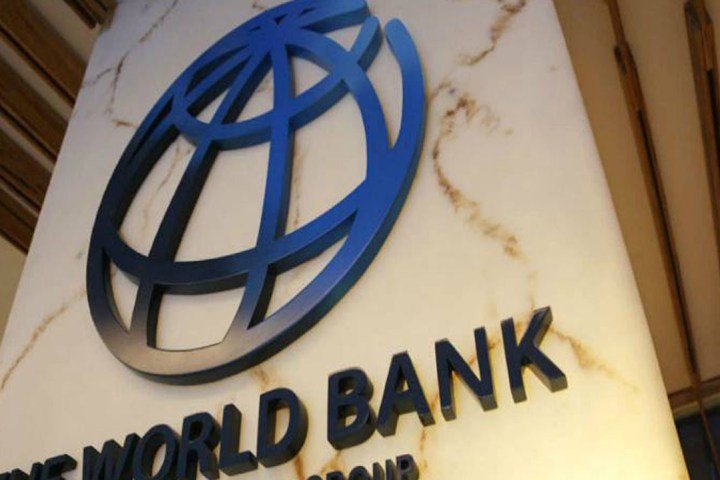
The World Bank has stated that the Central Bank of Nigeria’s exchange rate management policies continue to discourage investment and fuel inflation.
This was disclosed by the World Bank in the November 2021 edition of its Nigeria Development Update tagged “Time for Business Unusual”.
The World Bank said the whole of Nigeria’s debt burden remains manageable for the time being, maintaining sustainable debt dynamics will require curbing the use of CBN financing for the deficit and addressing fiscal pressures to break the cycle of low growth and rising public debt.
The primary macroeconomic challenges disturbing growth, according to the World Bank, are issues around the predictability and credibility of exchange-rate management, as well as an insufficient supply of foreign exchange (FX).
“The government’s exchange rate management policies continue to discourage investment and fuel inflation. Exchange rate stability is a key CBN policy objective, and to preserve its external reserves, the CBN continues to manage FX demand and limit the supply of FX to the market.” The report stated
The World Bank stated that the Nigerian central bank’s exchange rate cannot handle external shocks to the economy, as exchange-rate management emerges as one of the key drivers of inflation.
“Pressure on the naira (₦) remains intense, while the CBN has raised the nominal official exchange rate three times since the start of the pandemic (by 15% in March 2020, 5 per cent in August 2020, and 7% in May 2021), FX management remains too rigid to respond to external shocks. Meanwhile, exchange-rate management has emerged as one of the key drivers of inflation,” the World Bank added.
Naira lost pace against the US dollar at the parallel market, falling to as low as N560/$1 from N545/$1 that it had maintained in almost two weeks. There is still a significant gap between the N415.07/$1, at the official Investors and Exporters (I&E) window and the parallel despite cries of devaluation.

Related Posts

Leaders target financial resilience at NCBA breakfast 2026
Financial inclusion in Kenya has made significant strides, yet industry leaders gathered at the NCBA Financial Inclusion Breakfast…
 By
By
Kenya Power posts KSh24.99bn as revenue climbs 8.6% in FY2026
Kenya Power and Lighting Company PLC (Kenya Power) has reported a 2.1% increase in profit after tax to…

Standard Bank Namibia, NAMCOL partner on employee value banking
The Namibia College of Open Learning (NAMCOL) and Standard Bank Namibia have strengthened their strategic partnership through a…
KNCCI, Sidian Bank to boost SME and MSME financing
The Kenya National Chamber of Commerce and Industry (KNCCI) has engaged Sidian Bank in high-level discussions to strengthen…





Gallery