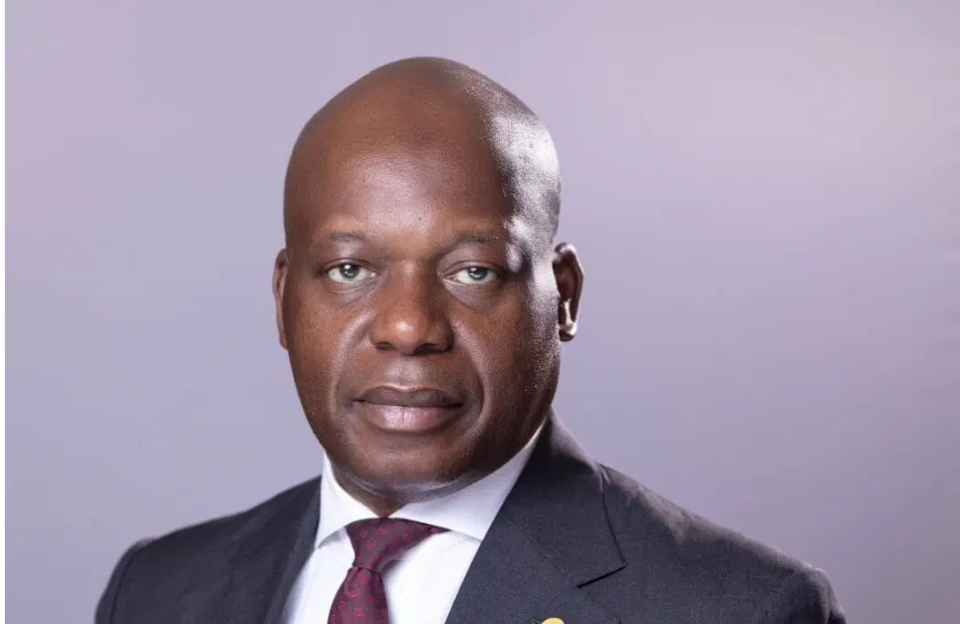
NEW: Oando posts ₦2.1trn revenue in H1 2026

Oando PLC, one of Africa’s leading indigenous energy companies, has reported a solid first-half performance for 2026, driven by higher production, improved facility reliability and cost efficiencies.
In its unaudited results for the six months ended 30 June 2026, the Group recorded a 20% increase in revenue to ₦2.1 trillion. Profit after tax rose 8% to ₦68.6 billion, while gross profit jumped 331% to ₦101 billion. The company said the stronger earnings reflected lower transport, logistics, service and ICT costs, combined with higher production against a largely fixed field cost base.
Oando’s upstream subsidiary delivered average production of 42,789 barrels of oil equivalent per day (boepd), a 16% increase from 36,836 boepd in the same period of 2025.
Facility uptime improved to 92% from 85% a year earlier. Crude oil output rose 19% to 12,358 barrels of oil per day, gas volumes increased 14% to 28,497 boepd, and natural gas liquids production grew 16% to 1,935 boepd.
The company attributed the production gains to the successful drilling of new wells, the restoration of 12 previously shut-in wells, and sustained improvements in facility uptime across OMLs 60–63. Production operating costs fell 18% to US$16.83 per barrel of oil equivalent.
In the trading business, volumes edged up 2.1% to 13.15 million barrels. Oando said the growth came from its crude oil marketing and offtake programmes and increased sourcing from marginal field producers. The company plans to expand its broader crude oil marketing and trading portfolio in the second half of the year.
Group Chief Executive Wale Tinubu CON described the first half as an important inflection point. “Over the past two years, our priority has been to successfully integrate one of the most significant upstream acquisitions in Africa and unlock the full value of our expanded portfolio.
The progress achieved during the period demonstrates that we are now delivering the operational and financial outcomes expected from that transformation,” he said.
Tinubu noted that the company had strengthened asset integrity, improved facility reliability and reinforced security across its operating areas. The development programme also gained momentum, with two land development wells successfully drilled and completed, a third well currently being drilled, and a second drilling rig being mobilised. An extensive programme of rig-less well interventions continued in parallel to restore production and offset natural decline.
ALSO READ: S&P CONFIRMS SHELTER AFRIQUE DEVELOPMENT BANK’S NEW GREEN BOND COMPLIANCE
Looking ahead, Oando reaffirmed full-year production guidance of 40,000–50,000 boepd, supported by a seven-well drilling programme across OMLs 60–63. The trading arm has revised its volume guidance to 22–26 million barrels. The company is also advancing a Rights Issue, a US$1.5 billion multi-instrument issuance programme, and the expansion of its clean energy initiatives.
Beyond 2026, Oando has identified an inventory of 62 development wells and 55 planned well interventions, which it says provide a clear pathway towards a medium-term production ambition of approximately 100,000 boepd.
Management’s priorities for the remainder of the year include completing the current drilling and intervention campaigns, optimising the capital structure, and strengthening the balance sheet to support accelerated growth.
Other independent producers also reported production growth in the period. Seplat Energy Plc recorded a 4% increase in average production to 139,509 boepd, while Aradel Holdings Plc reported a significant rise to 139.5 kboepd.

Related Posts

VFD Group appoints Ijeoma Emezie-Ezigbo as new Deputy Managing Director
VFD Group has appointed Ijeoma Emezie-Ezigbo as Deputy Managing Director, bringing a seasoned deal-advisory leader into its executive…
 By
ByAnne Juuko leads East African Development Bank as new CEO
The East African Development Bank has appointed Anne Juuko as its new chief executive, placing a seasoned banking…

Etihad, Ibom Air sign new Interline agreement linking Nigeria to global network
Etihad Airways, the national carrier of the United Arab Emirates, and Nigerian airline Ibom Air have signed an…

Infobip appoints Mirta Pađen Lee as new VP of People to drive AI-first transformation
Global AI-first cloud communications platform Infobip has appointed Mirta Pađen Lee as Vice President of People, effective 1…




Gallery