Post-Pandemic Travel Boosts Global Economy’s 3% Growth Forecast, says IMF

The International Monetary Fund (IMF) has raised its projection for global economic growth in 2023 to 3%, citing a 0.2% improvement from its earlier forecast in April. The surge in economic optimism is attributed in part to the resumption of post-pandemic travel, which has breathed new life into the tourism and services sectors. Furthermore, a robust jobs market has contributed to the positive outlook. However, the IMF also warns of potential risks such as soaring consumer prices and higher interest rates, particularly in developed nations, while keeping a close eye on China’s delicate economic recovery.
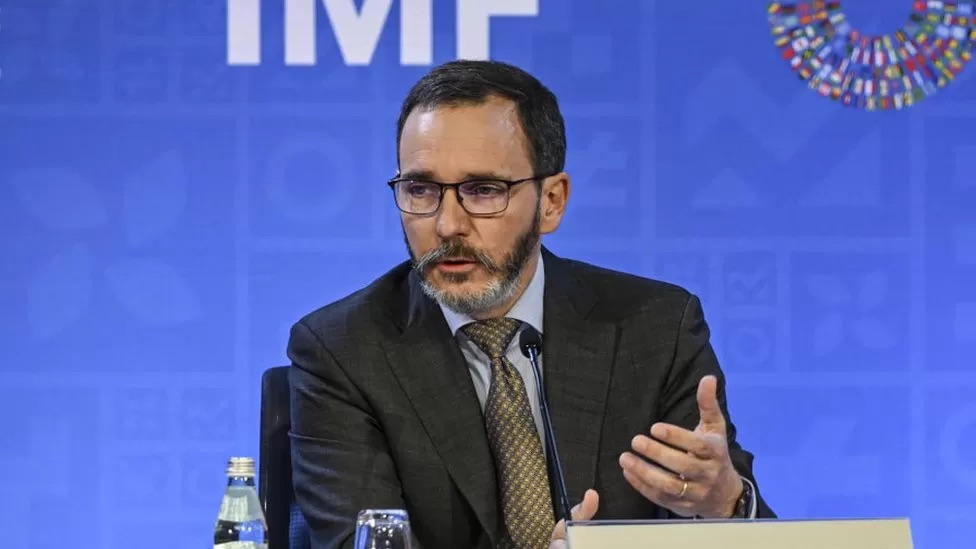
Pierre-Olivier Gourinchas, the Chief Economist at IMF, spoke about the ongoing impact of the pandemic’s recovery. He highlighted the strong demand for services, travel, and tourism in the first three months of 2023, with tourist destinations showing promising results. Countries with a manufacturing focus have also seen improvements, albeit not as strong as those in the tourism sector.
The International Air Transport Association’s latest data reveals that global air traffic in May continued to recover, reaching an impressive 96.1% of pre-COVID levels. However, certain regions heavily reliant on tourism, such as some southern European countries, still face challenges, with recent wildfires having caused substantial damage to their economies.
Among the major economies, emerging economies like China and India are expected to experience the fastest growth this year, while advanced economies such as Europe and the United States are anticipated to grow at a slower pace. The United Kingdom has undergone one of the most significant growth upgrades since April, with the IMF confirming the expectation of a 0.4% growth instead of a 0.3% decline.
Despite the overall positive outlook, the IMF cautions that global economic growth still lags behind pre-pandemic levels of 2000 and 2019, which averaged at 3.8%. Various challenges remain, including the ongoing debt crisis in China’s property market, geopolitical tensions such as the war in Ukraine, and managing inflation and rising borrowing costs.
To address the issue of surging consumer prices, known as inflation, Mr. Gourinchas urges central banks to take appropriate measures. Many central banks, including the US Federal Reserve, Bank of England, and European Central Bank, are yet to achieve their 2% inflation targets. Consequently, interest rates have been raised to curb borrowing and cool down economies, resulting in rates reaching levels not seen since before the 2008 global financial crisis.
Both the US Federal Reserve and the European Central Bank are expected to increase borrowing costs further in the upcoming week. As the world remains cautiously optimistic about the economic rebound, the IMF underscores the importance of addressing these challenges to foster sustainable global economic growth.

Related Posts

VFD Group appoints Ijeoma Emezie-Ezigbo as new Deputy Managing Director
VFD Group has appointed Ijeoma Emezie-Ezigbo as Deputy Managing Director, bringing a seasoned deal-advisory leader into its executive…
 By
ByAnne Juuko leads East African Development Bank as new CEO
The East African Development Bank has appointed Anne Juuko as its new chief executive, placing a seasoned banking…

Etihad, Ibom Air sign new Interline agreement linking Nigeria to global network
Etihad Airways, the national carrier of the United Arab Emirates, and Nigerian airline Ibom Air have signed an…

Infobip appoints Mirta Pađen Lee as new VP of People to drive AI-first transformation
Global AI-first cloud communications platform Infobip has appointed Mirta Pađen Lee as Vice President of People, effective 1…





Gallery